











From Internet Users to Digital Citizens: Digital Literacy Definitions and Models Continue to Evolve
Safer Internet Armenia actively participated in the EuroDIG session "From Internet Users to Digital Citizens," held on June 7, 2017, in Tallinn. The session, co-organized by the Internet Society European Affairs Bureau, brought together experts from business, government, academia, and civil society to discuss what digital literacy means in today’s Internet environment and how existing skill sets can be upgraded. Successful examples of digital literacy initiatives were examined, and community-level digital skills strategies were discussed. The workshop was moderated by Narine Khachatryan, Safer Internet Armenia Coordinator.
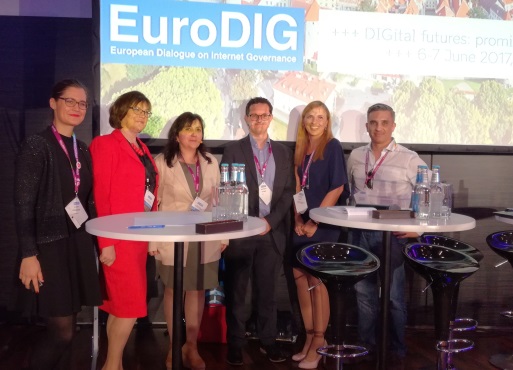 Stephen Wyber, an expert at the International Federation of Library Associations, spoke about the work libraries are doing to help people become empowered digital citizens and presented good practices in digital literacy education. Vitor Tomé (PhD), an in-service teacher trainer and researcher, spoke about the work of the Council of Europe’s Digital Citizenship Working Group and the Council of Europe’s Educational Policy Division. Kristel Rillo, a representative of the Estonian Ministry of Education and Research, presented her experience related to Estonia’s digital education policy, 21st-century curriculum, and skills, providing examples of the use of technology in classrooms and throughout lifelong learning. She also discussed how to ensure that digital literacy skills are adequately promoted in curricula, teacher development, and learning content. Clara Sommier, an analyst in the Public Policy & Government Relations team at Google in Brussels, focused on strengthening the positive impact of the web and ensuring it remains a safe space. Signe Bāliņa (Dr), Counselor to the Minister for Regional Development of Latvia, discussed what types of skill development policies are needed to reduce the risk of increased unemployment and the role of different actors: government, the private sector, and communities. The discussants agreed that digital literacy means much more than mastering ICT skills.
"Digitally savvy citizens are empowered to improve their education and, subsequently, their economic and social well-being; they also participate actively in the political and cultural life of their countries. Information and media literacy competence is essential for navigating the abundance of information and critically evaluating and analyzing it. Communication and collaboration skills enable people to engage in citizenship, value human rights and democracy, and respect cultural and generational diversity. Participation skills help people create and co-create digital content. Safety competence enables people to protect themselves from cybercrime, while digital emotional intelligence helps build positive online relationships," summarized by Narine Khachatryan.
Emphasizing the importance of problem-solving capacity, participants concluded that all the above-mentioned skills should be viewed holistically and acquired in an integrated way. The workshop concluded that recent developments in data science, information visualization, artificial intelligence, and robotics necessitate rethinking traditional approaches to learning and education. The concept of digital literacy may therefore incorporate new skills, such as data analysis and coding. Educational institutions and public–private partnerships can play a crucial role in providing the necessary tools and opportunities. Cross-institutional collaboration, large-scale teacher training, and a comprehensive action plan involving all stakeholders are required. Therefore, it is important to recognize that digital literacy definitions and models will continue to evolve. The concept of digital literacy may be viewed in the context of the development of the Internet, ICTs, and big data — developments that are still difficult to forecast. The video recording of the session can be found here.
